
CASE STUDYHarmony
Design System
Unifying Two Legacy Systems Into One Source of Truth
13+
teams aligned30+
products supported65+
components audited100%
WCAG ACCessibile100%
Brand Compliant01 - OverviewHarmony at a glance
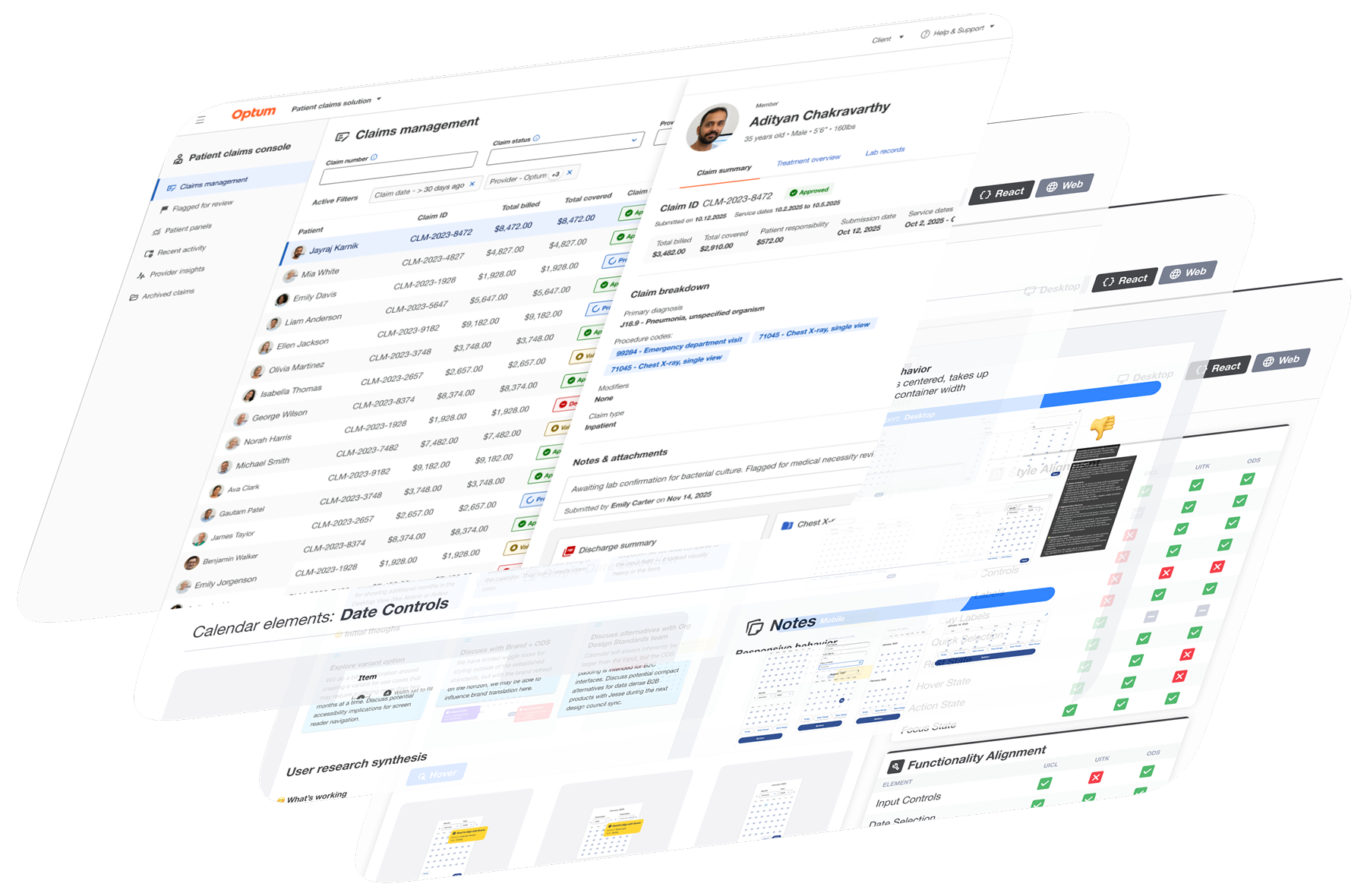
As Senior Product Systems Designer for Change Healthcare’s UICL design system, I led the evolution of the design foundations powering Optum Insight’s B2B SaaS products. Midway through this work, another legacy system—UITK—lost funding but continued supporting multiple live products. Ownership of UITK was transferred to our team.
Suddenly, product designers and engineers were navigating two competing design systems. Experiences drifted apart, delivery slowed, and teams weren’t sure which system to trust. Harmony became our answer: a unified, modernized design system built to restore clarity, consistency, and confidence across the product ecosystem.
ROLE
Leading strategy, cross‑system audits, accessibility alignment, component design, token architecture, and designer adoption.
TEAM
6 engineers, supporting UX designer, A11y expert, QA expert, project manager
TOOLS
Figma, Figma AI Agent, Tokens Studio, Zeroheight, Github, Airtable, Rally, Copilot
02 - THE CHALLENGEWhy Harmony was necessary
Maintaining two parallel design systems was unsustainable and created friction across the organization.
Brand alignment and accessibility compliance became increasingly difficult to guarantee.
Products built on UICL and UITK looked and behaved differently, confusing users and eroding trust in the brand.
Designers and engineers spent time reconciling differences instead of shipping.
Both systems had strengths, but neither was complete enough to serve as the long‑term foundation.